Notice recurring questions and invite community members to describe what matters in their own words.
Community Journalism Workshop
Find the story around the corner.
Build the practical habits behind useful local reporting: listen well, check what you hear, write clearly and publish with care.
- 7 weekly workshops
- Hands-on assignments
- Canada-focused examples
What we practise
Reporting begins with attention.
Local stories shape how neighbours understand a council decision, a school change, a new service or a shared concern. This workshop is an introduction to gathering those stories responsibly — without assuming prior newsroom experience.
Participants work toward a small, publishable story package grounded in public-interest reporting. The emphasis is on process: finding a useful question, hearing more than one perspective, verifying details, choosing an accessible format and making corrections when needed.
Distinguish observation, documentation and opinion; then show readers how you know.
Use clear language, explain choices and correct meaningful errors promptly and visibly.
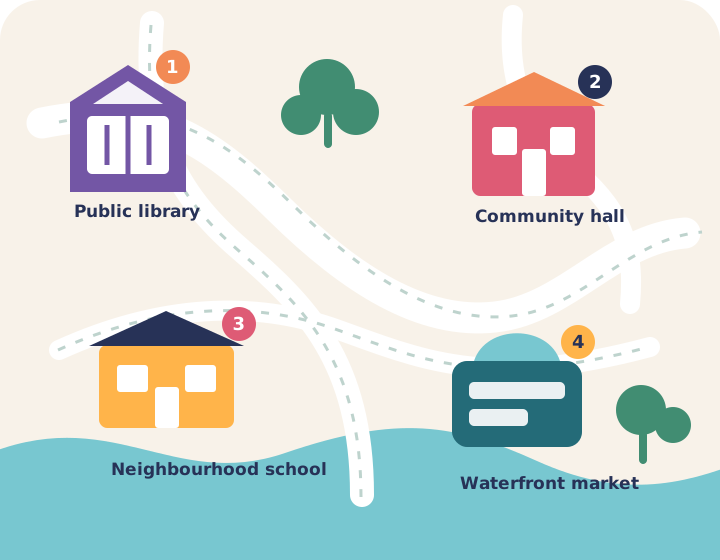
Your seven-week route
A workshop map from first question to final story.
Each week combines a focused lesson, examples, guided practice and one manageable field assignment.
Find the public-interest question
Turn local observations into answerable story ideas. Map who is affected and what readers need to know.
Host a listening session
Plan a small, respectful conversation and identify patterns without treating the loudest voice as the whole story.
Interview inclusively
Prepare open questions, seek informed consent and make space for sources with different access needs.
Cover local institutions
Read agendas and records, observe council or school-board meetings and follow decisions through to local impact.
Report across communities
Avoid shortcuts and stereotypes. Add context, check names and language, and notice whose perspective is missing.
Publish for access
Structure web stories for scanning, write useful links and alt text, and add simple community photo or audio.
Edit, correct and share
Fact-check the final package, write a corrections note and make a thoughtful plan for reaching the people involved.
Hands-on assignments
Make something useful each week.
The exercises are small enough to finish and concrete enough to become part of your final package.
A community listening memo
Summarize what you heard, what remains uncertain and which voices you still need to seek.
A verified interview excerpt
Record accurate notes, confirm key details and add the context a reader needs to understand the quote.
A local story package
Combine a concise web story with a captioned photo, short audio clip or explanatory sidebar.
Working values
Care is part of the craft.
Good intentions are not enough. We use repeatable practices that help participants report fairly and respond when something goes wrong.
Accessibility
Plain language, meaningful headings, descriptive links, alt text and flexible ways to participate.
Consent and context
Sources understand the conversation, while reporters remain clear about editorial independence and public interest.
Corrections
Participants learn a simple correction process: verify the issue, update the work and explain material changes.
Source care
We consider safety, power and possible consequences without promising control over a finished story.
Practical format
Built for learning by doing.
What a workshop includes
- One facilitated group session each week
- Short readings and Canadian public-record examples
- A field assignment designed for roughly two to three hours
- Structured peer feedback using a clear review guide
- A final story clinic focused on accuracy and accessibility
Who it is for
- Residents curious about documenting their community
- Student journalists looking for guided field practice
- Local communicators who want stronger reporting habits
- Community publishers building a fair, transparent process
No journalism degree or professional newsroom experience is required.
Lead facilitator
Guides reporting exercises, discussion and the weekly story clinic.
Community editor
Helps participants test story focus, evidence and fairness.
Media coach
Supports accessible web publishing, photo captions and simple audio.
Facilitator names, experience and session availability are provided with each scheduled workshop. The programme is skills-based and does not represent professional accreditation.
A good learner fit
Bring curiosity, patience and a local question.
- You can attend respectfully and protect personal information.
- You are willing to revise when the reporting changes your assumptions.
- You can approach at least two sources outside the workshop.
- You want feedback on the process, not just the final wording.
Questions
Before the first session.
Is this a certificate or accredited programme?
No. It is a practical, non-accredited workshop focused on introductory community-reporting skills. Participation does not grant a journalism credential.
Do I need specialist equipment?
No. A notebook and a device that can access shared course materials are enough. A phone can be used for the optional photo and audio exercises.
Will my final story be published?
Publication is not automatic. Participants decide whether to share their work and remain responsible for obtaining permissions and completing final fact checks. A host organization may describe its own publication process separately.
Can the workshop cover my specific province or territory?
The core reporting practices apply across Canada. Public-record access, meeting rules and publication law can vary, so participants are directed to verify requirements in their own jurisdiction.
What accessibility support is available?
Workshop notices identify the delivery format and available accommodations. Participants are encouraged to share access needs with the programme contact before a scheduled session.
Questions about a workshop?
For scheduling, access or curriculum questions, contact the programme team.